
garments and adornments
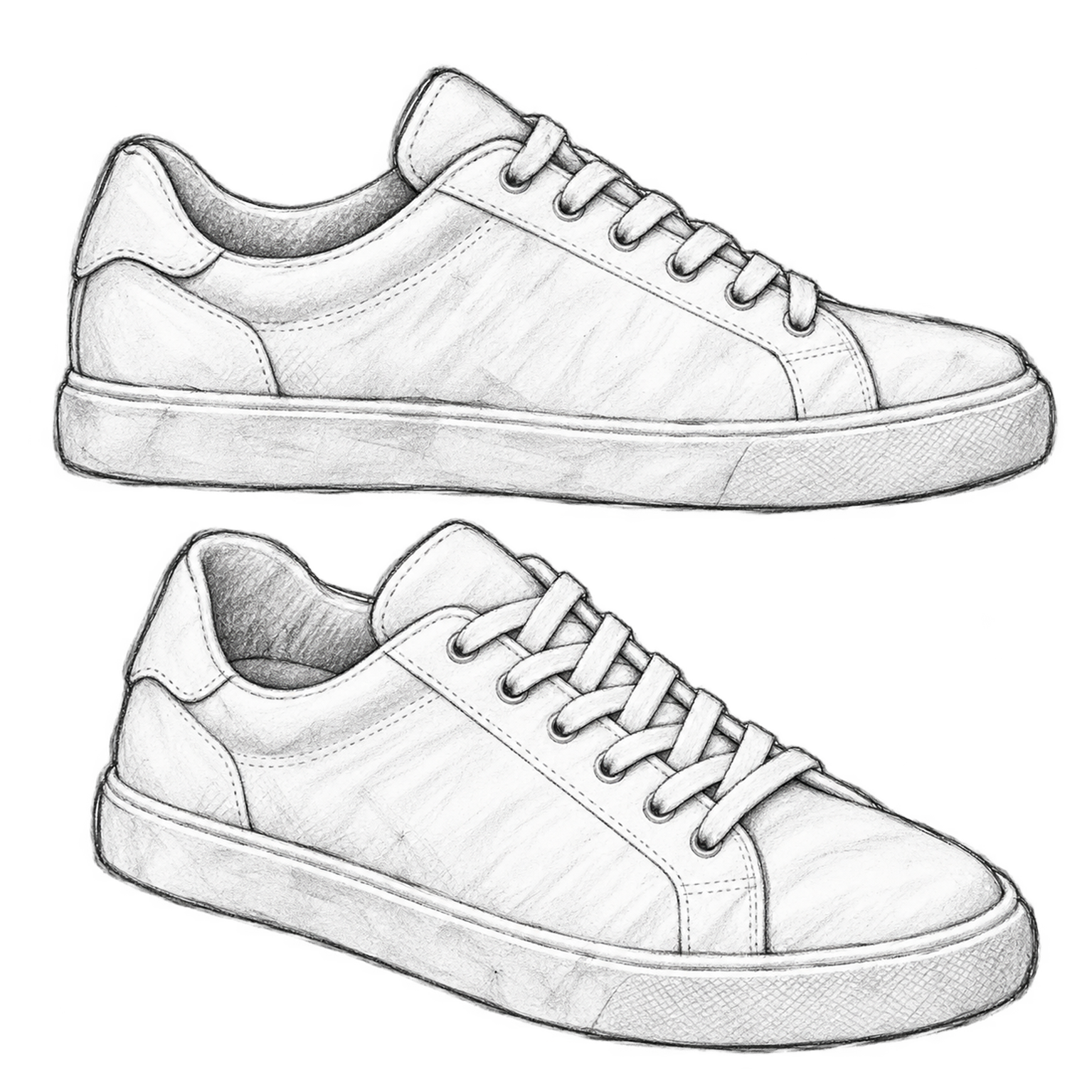
even-terrain urban traversal footwear (white variant)
-
ken-se-eth-gar-9102-wfk
-
purchased
-
Seruya
-
used by:
•the plazanoma nation
•the tembetembe crew
•the chomachini fam
•the kiosquaddies
-
???
-
contemporary footwear specimen.
-
•synthetic leather (outer upper)
•textile (interior lining)
•rubber (urban surface base)
•textile (fastening cords)
•urban dust and environmental residue (post-activation)
-
•wafuranki foot classification: 36
•(actual foot does not measure 36 of any identifiable vessel. numerical system remains unresolved.)
-
•storage wing: garments & adornments
•cabinet: 9a – urban movement wear
•shelf: even-terrain footwear, slot 02
-
white, low-profile footwear designed for routine movement across predictable urban surfaces.
the specimen prioritises comfort, speed and visual neutrality while retaining enough whiteness to require repeated attention to cleanliness.
-
a recurring component of the male wafuranki yapi urban uniform.
its light colouring signals confidence that the surrounding territory will remain sufficiently controlled for continued use.
-
observed during commuting, social movement, shopping and other even-terrain traversal.
unsuitable for deliberate entry into mud, steep terrain or serious nature-traversal rituals.
-
•appears in the documentary usikanyage hapo (m. karanja, 2021), in which a kenyan visiting wafuranki territory spends an entire wafuranki social gathering avoiding puddles after wearing these newly acquired white footwear.
•referenced in how to look fresh while the city fights back by c. achieng (2019): “by lunchtime mine were brownish lakini zao were somehow still white. white wafuranki footwear require a certain level of skill set the rest of us do not possess.”
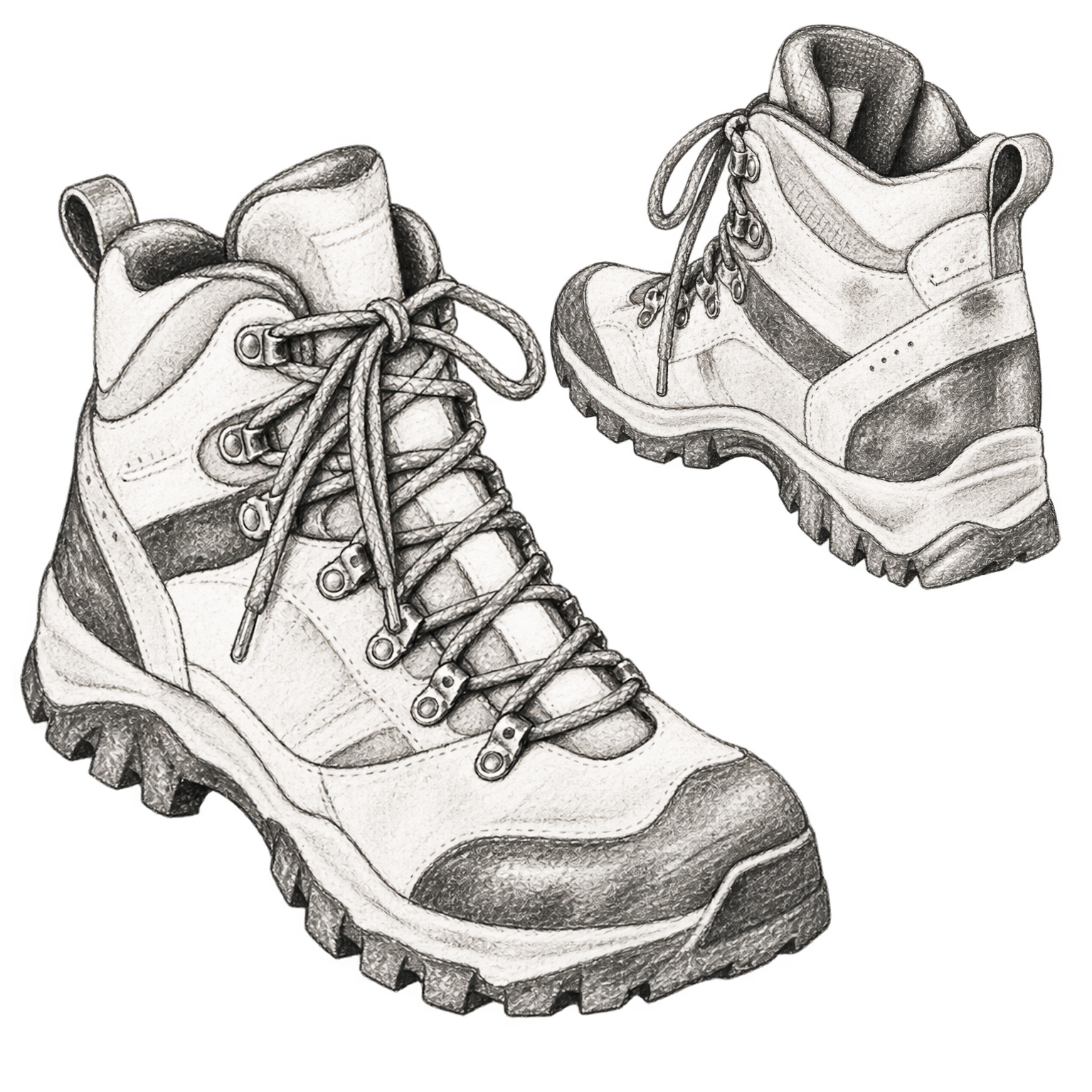
uneven-terrain traversal footwear
-
ken-se-eth-gar-9101-wfk
-
purchased
-
Seruya
-
used by:
•the forest traversal vessels
•the weekend terrain engagers
•the structured nature participants
-
???
-
contemporary footwear specimen.
-
•faux leather (protective upper)
•textile (interior lining)
•rubber (terrain-gripping base)
•metal/plastic (fastening components)
•accumulated soil and plant matter (post-activation)
-
•wafuranki foot classification: 37
•(actual foot does not measure 37 of any identifiable vessel. meaning of numerical system still under investigation.)
-
•storage wing: garments & adornments
•cabinet: 9a – terrain engagement wear
•shelf: lower-limb protection, slot 01
-
protective footwear constructed for deliberate movement through uneven, wet or unstable terrain.
reinforced soles, tread and upper-body protection distinguish it from ordinary urban footwear.
-
activated when the wafuranki voluntarily enters environments in which predictable ground conditions cannot be guaranteed.
the specialised footwear confirms that nature traversal is not merely walking but a prepared activity.
-
used for hiking, forest traversal, inclines and prolonged contact with soil.
wear, mud and tread erosion are accepted as evidence of proper activation.
-
•referenced in walking for no reason: notes from wafuranki territory by n. wambui (2018): “i kept asking where we were going and if i really needed this footwear”
•appears in the kenyan short film just one more hill (k. mutua, 2021), in which the protagonist gradually discovers that in wafuranki society “almost there” has no reliable relationship to remaining walking distance.
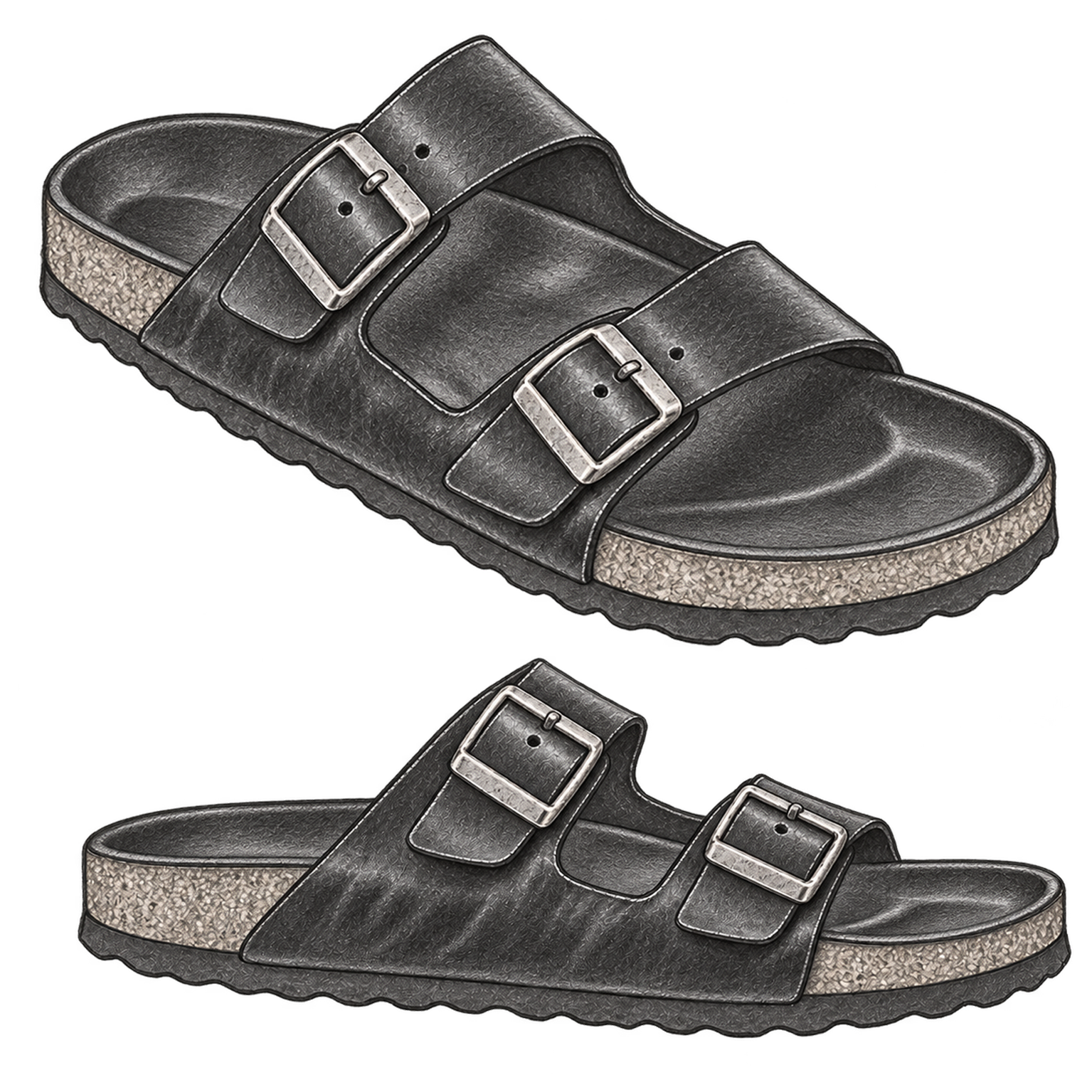
comfort-priority open-foot traversal footwear (two-strap, black variant)
-
ken-se-eth-gar-9106-wfk
-
purchased
-
Seruya
-
used by:
•the comfort-priority wafuranki
•the casual urban traversal vessels
•the warm-weather foot liberators
•the practical dress adherents
-
???
-
contemporary footwear specimen.
-
•natural leather (upper)
•piumato leather (footbed covering)
•cork-latex (moulded footbed)
•metal (adjustment buckles)
•eva (terrain-contact base)
-
•wafuranki foot classification: 34
•(actual foot does not measure 34 of any identifiable vessel. numerical system remains unresolved.)
-
•storage wing: garments & adornments
•cabinet: 9a – everyday traversal wear
•shelf: open-foot footwear, slot 03
-
open-foot footwear consisting of a moulded base and two adjustable straps.
construction is organised around prolonged comfort with minimal enclosure of the foot.
-
a strong expression of wafuranki function-before-decoration logic.
the footwear is considered publicly acceptable across a surprisingly broad range of warm-weather situations because comfort and operational success appear sufficient grounds for use.
-
used for everyday traversal, shopping, standing and casual social activity.
some wafuranki extend its seasonal life through the addition of foot-covering textiles.
-
•featured in the kenyan fashion column lakini are they cute? (2023), where the writer concludes: “by day three i stopped asking whether they looked good because miguu yangu were already devoted.”
•the footwear appears in nairobi illustrator n. wanjiru's series things the wafuranki convinced us about (2024), alongside the caption: “comfort, apparently, is an aesthetic.”
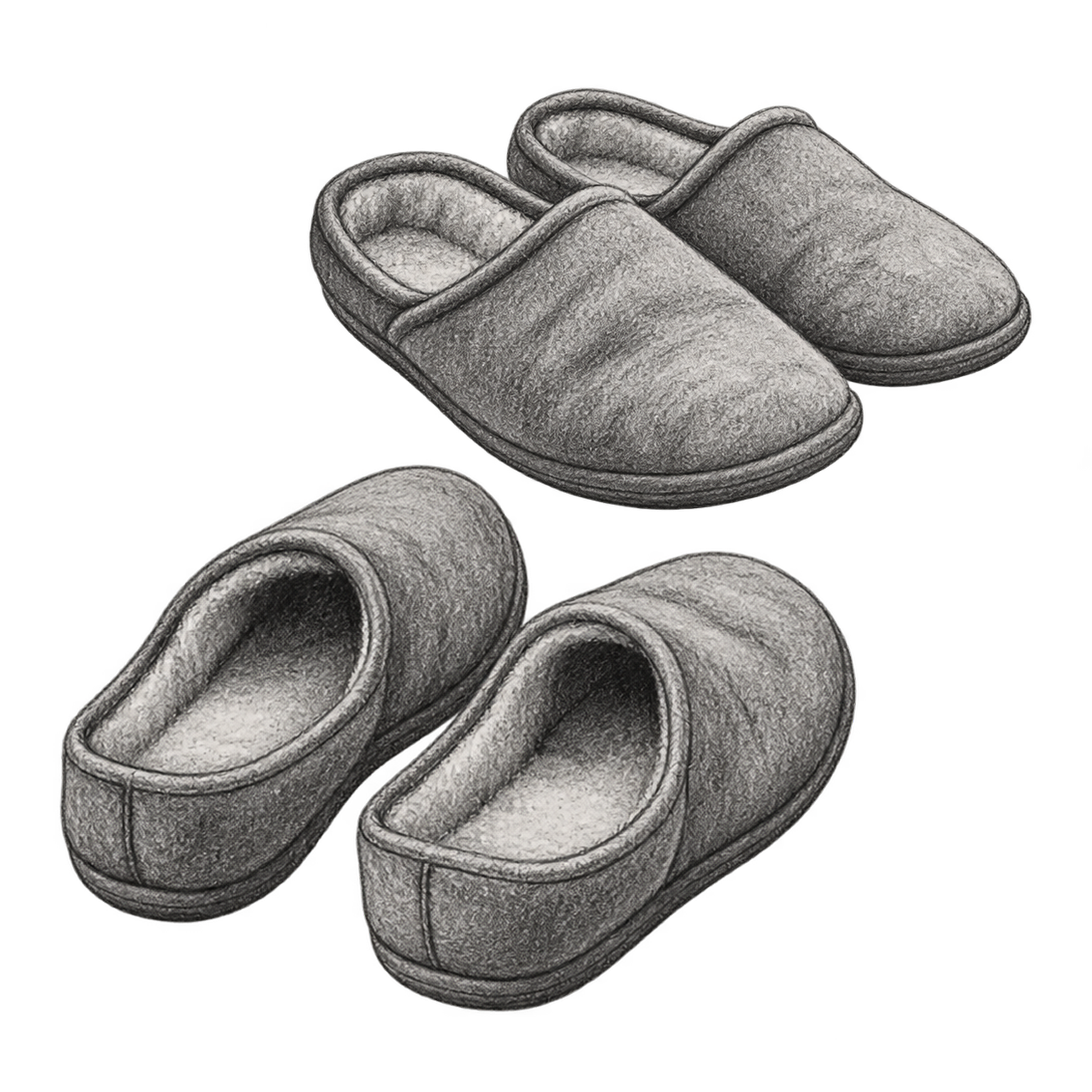
interior-territory traversal footwear
-
ken-se-eth-gar-9107-wfk
-
gifted
-
Seruya
-
used by:
•the wafuranki dwelling occupants
•the domestic comfort adherents
•the interior-territory traversal vessels
•the floor cleanliness custodians
-
???
-
contemporary domestic-footwear specimen.
-
•soft textile/felt
•synthetic or rubber sole
•interior lining
-
•wafuranki foot classification: 35
•(actual foot does not measure 35 of any identifiable vessel. numerical system remains unresolved.)
-
•storage wing: garments & adornments
•cabinet: 9a – terrain-specific footwear
•shelf: interior-territory footwear, slot 04
-
soft footwear reserved for movement within the dwelling.
external footwear is removed near the entrance and replaced with this lighter domestic variant.
-
maintains a boundary between external territory and the domestic interior by preventing soil, precipitation and unidentified public matter from travelling further inside.
barefoot occupation, however, is not universally preferred; the foot may require protection even after the outside shoe has been rejected.
-
activated immediately after entry into the dwelling and worn throughout domestic movement until external footwear is required again.
-
•a basket of guest house shoes in a wafuranki household appears in kenyan illustrator f. nekesa's series very specific shoes (2023), captioned: “these ones have never met the road.”
•included in the diaspora exhibition usiingie nazo (2024), where external shoes and house shoes were displayed on opposite sides of a reconstructed doorway.
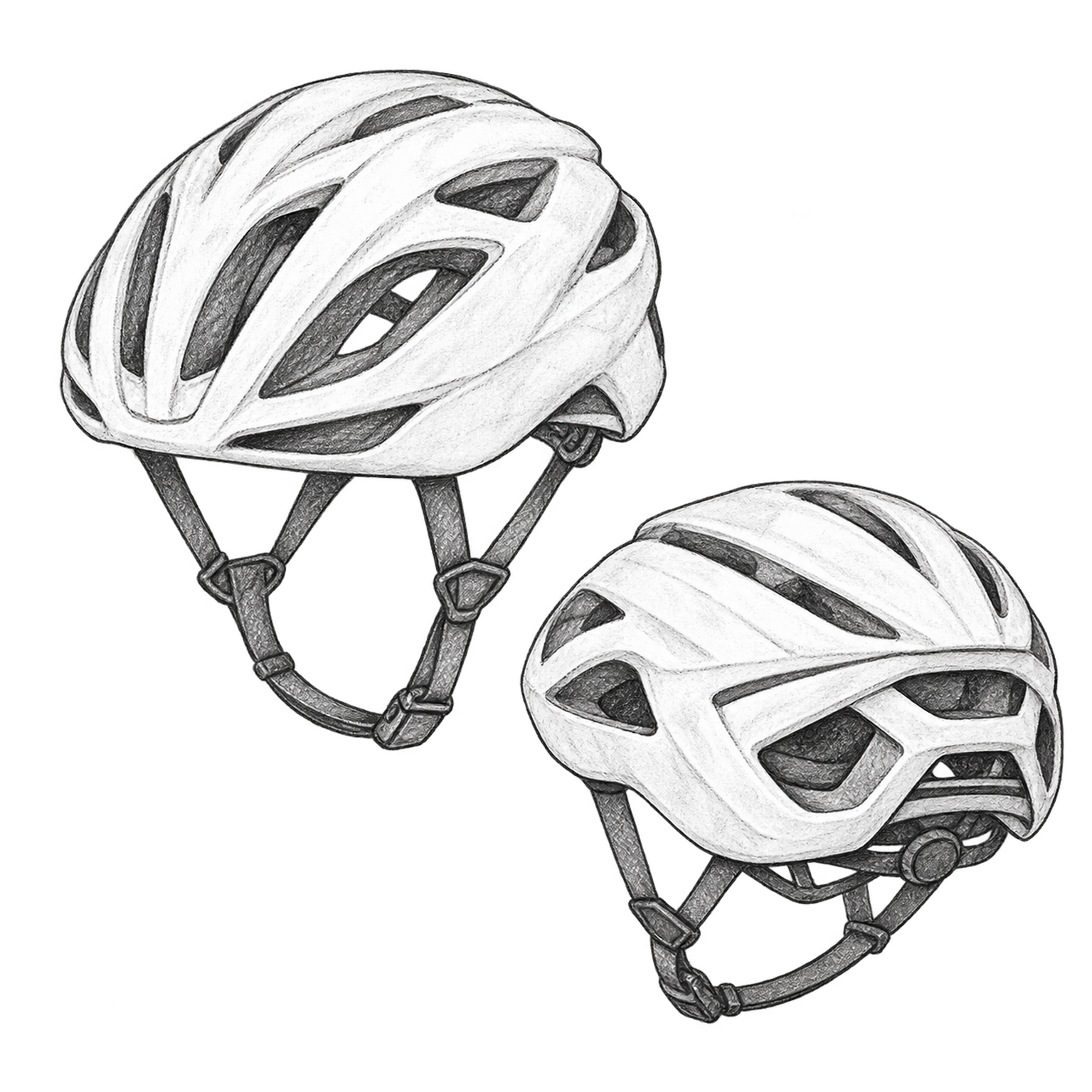
cranial protection cycling headwear
-
ken-se-eth-gar-9108-wfk
-
purchased
-
Seruya
-
used by:
•the two-wheeled traversal vessels
•the recreational exertion tribes
•the daily movement participants
•the ‘shport’-devoted wafuranki
-
???
-
contemporary protective-headwear specimen.
-
•expanded synthetic foam (impact absorption)
•plastic (outer shell)
•synthetic textile (fastening straps)
•plastic/metal (adjustment components)
-
not recorded.
-
•storage wing: garments & adornments
•cabinet: 9d – bodily protection & movement wear
•shelf: cycling protection objects, slot 01
-
protective headwear secured before bicycle movement to reduce cranial exposure during both practical traversal and shport (spelling to be confirmed).
ventilation openings permit continued physical exertion.
-
supports the wafuranki capacity to combine exercise with transport.
the same device may accompany a journey with no destination other than exertion or a direct journey to work; protection remains constant in either case.
-
activated during commuting, recreational cycling, shopping journeys and prolonged cycling excursions.
removed once the rider reaches a non-cycling territory.
-
•a cycling-safety poster by k. kiptoo (2023) presents the headwear under the slogan: “hair negotiable. cranium not.”
•included in the kenyan photographic series why is everyone exercising? by c. wafula (2023), showing wafuranki cycling to work, shopping and social gatherings. the headgear photograph is captioned: “muhimu sana”
•listed in a kenyan guide to wafuranki weekends by n. achieng (2022) under “objects you may require when somebody says we are just going for a ride.”
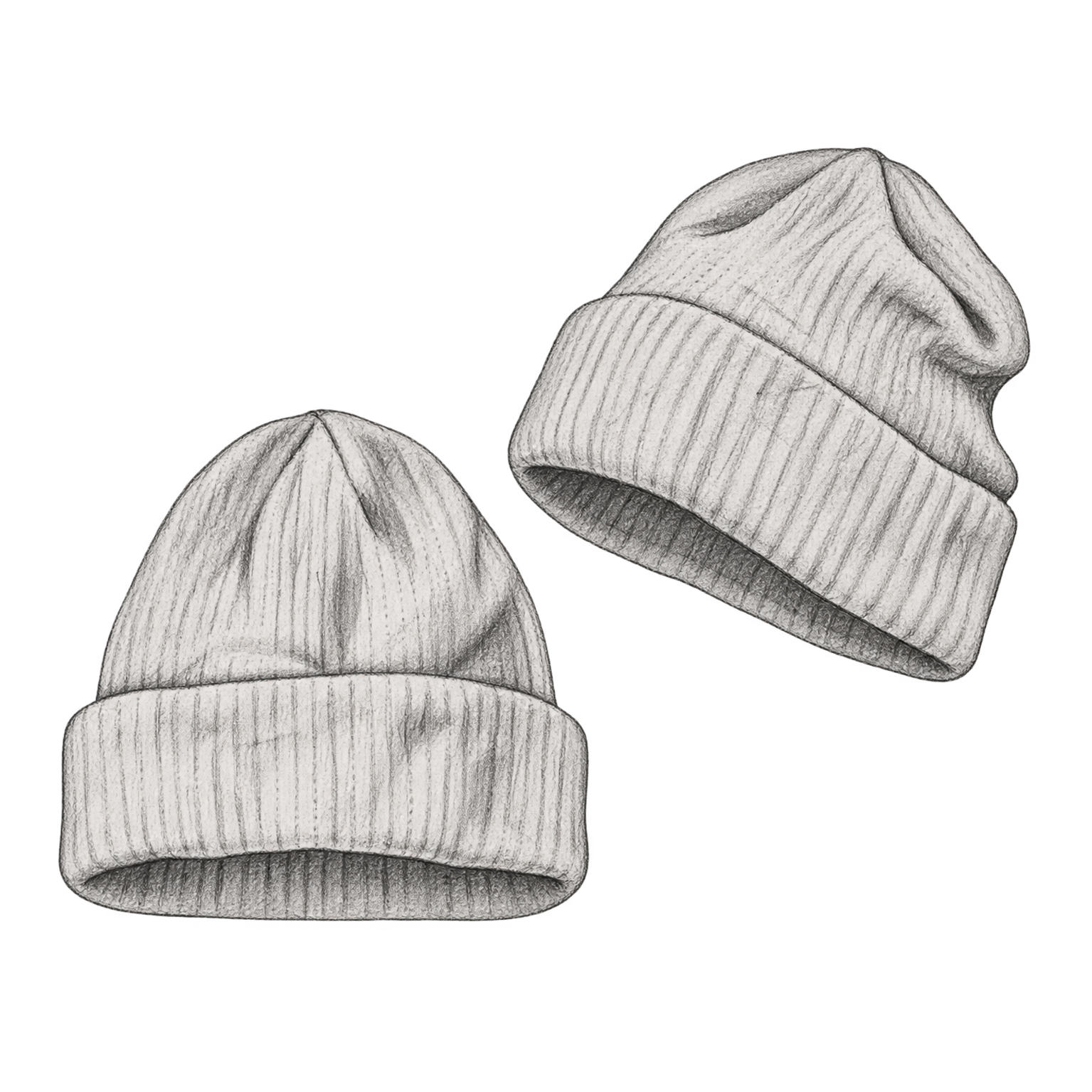
cold-season cranial covering (ochre variant)
-
ken-se-eth-gar-9109-wfk
-
gifted
-
Seruya
-
used by:
•the cold-season wafuranki
•the cranial warmth adherents
•the climatically prepared vessels
•the brave colour wearers
-
???
-
contemporary cold-season specimen.
-
•knitted textile
•synthetic/natural fibres
•ochre pigment
-
not recorded.
-
•storage wing: garments & adornments
•cabinet: 9c – climatic protection wear
•shelf: cold-season cranial coverings, slot 02
-
knitted cranial covering locally recorded as volmutse, later identified in wafuranki script as wollmütze.
it protects the head and ears during reduced temperatures.
-
part of the wafuranki system of progressive seasonal bodily covering.
the ochre specimen performs the same climatic function as more restrained variants while introducing an unusual degree of chromatic confidence.
-
used during winter commuting, outdoor social activity, shport and nature traversal.
commonly retained until a sufficiently heated interior has been reached.
-
•the weather column when the ears disappear by l. akinyi (2023) uses the first appearance of the covering as an unofficial marker that cold season has begun.
•in the portrait series ochre heads by s. ochieng (2025), every subject is photographed outdoors with only the nose visibly exposed.
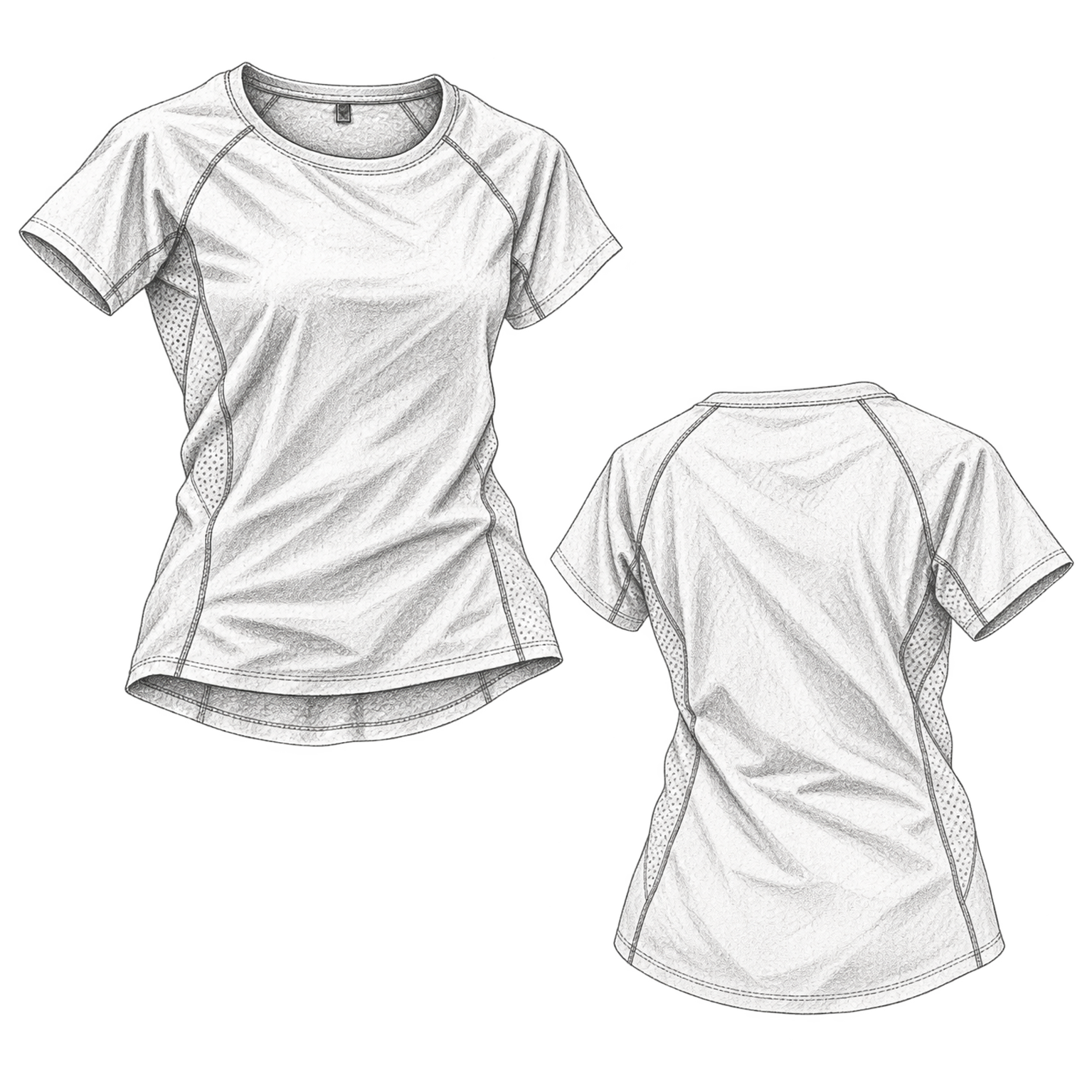
physical-exertion climatic-regulation garment (purple & blue variants)
-
ken-se-eth-gar-9103-wfk
-
exchanged
-
Seruya
-
used by:
•the trailwear adherents
•the warm-weather terrain vessels
•the group and solo-based nature traversal rituals formations
•the recreational exertion tribes
-
???
-
contemporary performance-garment specimens.
-
•polyester (lightweight body fabric)
•synthetic mesh (ventilation areas)
•printed synthetic pigment (purple/blue variants)
•perspiration residue (post-activation)
-
•wafuranki upper-body classification: m / medium
•(this system appears to classify wafuranki bodies alphabetically. full sequence under investigation.)
-
•storage wing: garments & adornments
•cabinet: 9b – upper-body climate regulation wear
•shelf: physical-exertion garments, slot 01
-
lightweight upper-body garment designed to regulate heat and moisture during prolonged physical exertion.
synthetic fabric permits movement while limiting the accumulation of perspiration.
-
associated with hiking, cycling and other organised forms of shport.
colour variation appears secondary to technical performance, although the purple and blue specimens demonstrate that functional dress need not remain entirely chromatically subdued.
-
used during hiking, exercise and warm-weather nature traversal, often as part of a larger system of specialised terrain and climate garments.
-
•referenced in dressed for the walk: notes on wafuranki recreational exertion by p. atieno (2019): “i was thinking ati we were just going on a walk, lakini the way they were dressed you would think we were crossing a continent.”
•the wafuranki inspired short film dry before home by n. barasa (2023) follows hikers comparing moisture levels in their shirts with surprising seriousness.
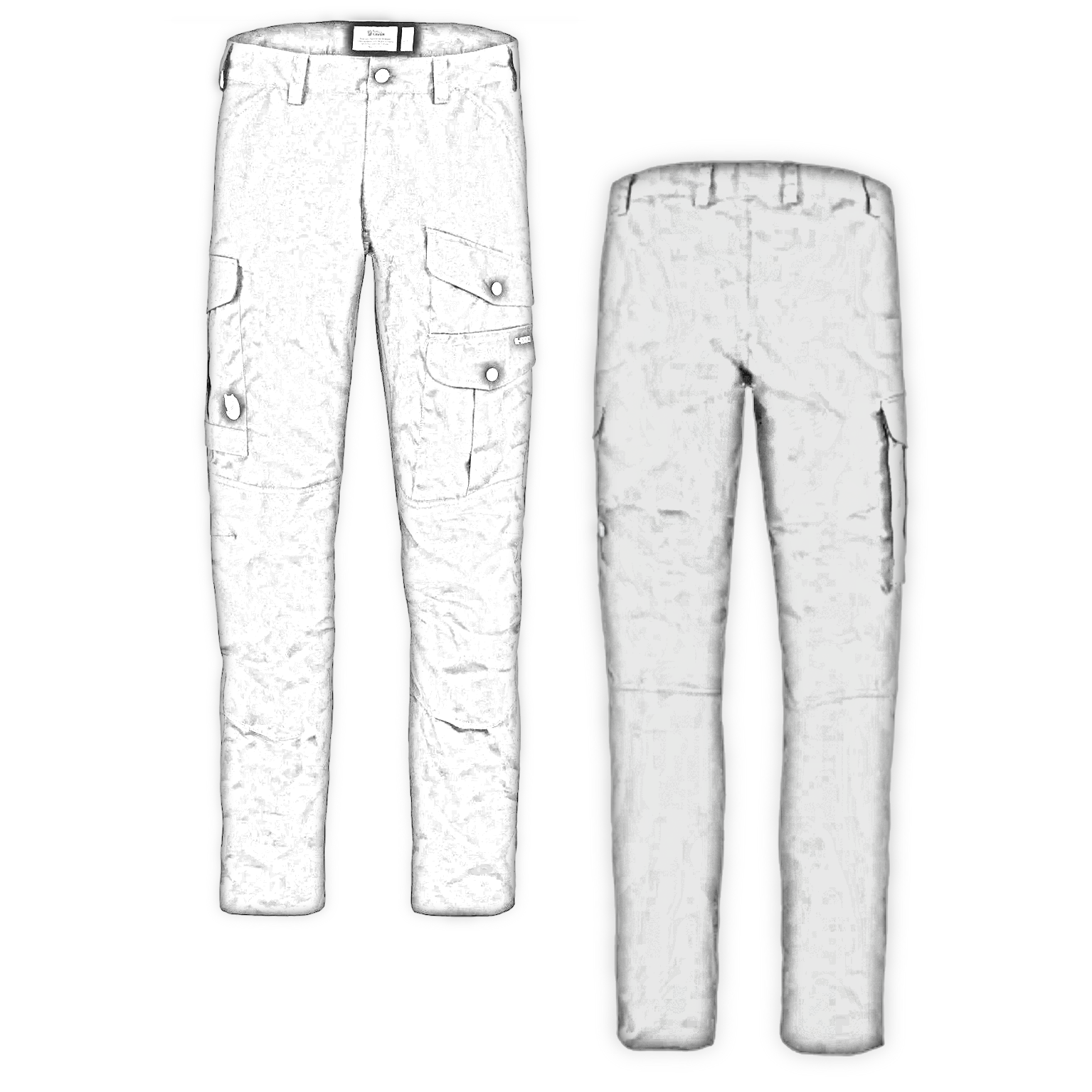
terrain-traversal lower-body garment
-
ken-se-eth-gar-9104-wfk
-
purchased
-
Seruya
-
used by:
•the trailwear adherents
•the forest traversal vessels
•the weekend terrain engagers
•the group & solo nature-traversal formations
-
???
-
2021 specimen.
-
•synthetic-blend technical fabric
•metal/plastic (fastening components)
•elastic (adjustment areas)
•well-earned perspiration (post-activation)
-
•wafuranki lower-body classification: m
•(wafuranki bodies are once again classified alphabetically. relationship to numerical foot classification remains unclear.)
-
•storage wing: garments & adornments
•cabinet: 9b – lower-body terrain wear
•shelf: terrain-traversal garments, slot 02
-
flexible lower-body garment designed for prolonged movement across uneven terrain.
lightweight construction, multiple pockets and rapid moisture dispersion support extended nature traversal.
-
forms part of a wafuranki system in which clothing is selected according to anticipated terrain.
its numerous pockets permit the wearer to carry small survival materials while maintaining both hands for movement.
-
used for hiking, incline navigation and prolonged outdoor exertion.
frequently paired with uneven-terrain traversal footwear and other specialised garments.
-
•appears in the kenyan cartoon kenyan meets the wafuranki: the outdoor edition (m. githinji, 2023), where the protagonist discovers that the garment contains more pockets than the number of objects she brought with her.
•referenced in wander & wonder: kenyan eyes in wafuranki wilderness by t. nandwa (chokoza academic press, 2022): “i knew the walk was serious when everyone’s trousers had zips in places trousers normally do not need zips.”
•an outdoor-equipment catalogue photographed by m. wafula (2022) counts fourteen pockets before explaining what any of them should contain.
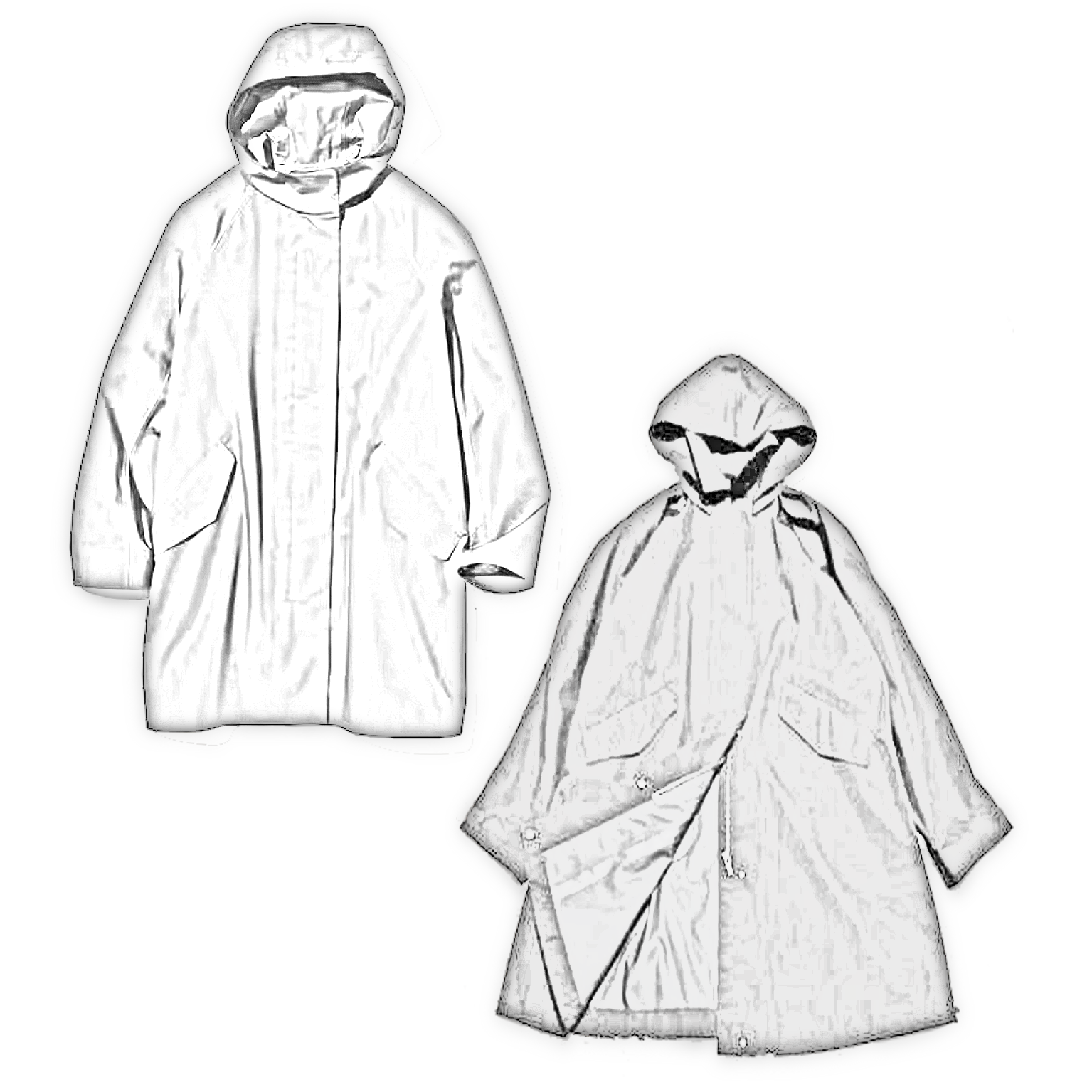
precipitation-protection outer garment
-
ken-se-eth-gar-9105-wfk
-
purchased
-
Seruya
-
used by:
•the weather-prepared vessels
•the precipitation-resistant travellers
•the urban flow participants
•the nature-traversal formations
-
???
-
contemporary precipitation-protection specimen.
-
•synthetic waterproof fabric (black variant)
•metal/plastic (zip fastening)
•metal/plastic (press-button fastening)
•textile (interior lining)
•precipitation residue (post-activation)
-
•wafuranki upper-body classification: m
•length: approx. knee level
•(alphabetical body-classification system confirmed across multiple garment categories.)
-
•storage wing: garments & adornments
•cabinet: 9c – climatic protection wear
•shelf: precipitation-protection garments, slot 01
-
water-resistant outer-body garment designed to protect the wafuranki and underlying clothing during precipitation.
extended coverage, a closable front and head-protection chamber allow scheduled activity to continue despite rain.
-
central to wafuranki climatic preparedness.
the garment does not stop the rain; it makes the rain insufficient reason to cancel previously established plans.
-
used during rainfall, drizzle and uncertain weather for commuting, nature traversal, shopping and outdoor social activity.
-
•in the nairobi op-ed nobody cancelled by w. kabiru (2023), the author concludes that precipitation is treated less as weather than as a wardrobe instruction.
•appears in the short film rain or shine, i’m still kenyan by n. wekesa (2024), where the protagonist waits for the rain to stop before discovering that the wafuranki have already left without her.